NEWS
Keep updated with us

Strengthening Your Supply Chain: Strategies for More Reliable Construction Projects
The construction industry supply chain is more than just a network of contractors, suppliers and logistics providers; it’s the foundation of successful project delivery. In a sector ruled by tight margins, complex regulatory pressures and mounting sustainability expectations, building a resilient, compliant and efficient supply chain is critical.
For contractors, a strong and resilient supply chain is no longer a competitive advantage, it's a necessity. By implementing smart procurement strategies, strengthening supplier relations and leveraging technology, construction companies can minimise risks and deliver projects on schedule.
In this blog we explore practical strategies to strengthen your construction supply chain and improve project reliability.
Why Supply Chain Management Matters in Construction
Construction projects rely on the timely delivery of hundreds of materials, equipment, and services. When even one critical component is delayed, the entire project schedule can be affected.
Effective supply chain management helps:
- Improve project predictability
- Increase transparency and accountability
- Improve safety and reduce incidents
- Support sustainability and social value goals
- Ensure everyone in the supply chain is competent and compliant
Companies with strong supply chain processes are better equipped to adapt to market changes and unexpected disruptions. From sourcing materials to coordinating with subcontractors, the way you handle your supply chain can significantly affect your project’s efficiency, sustainability, and bottom line.
How To Build a Resilient Construction Industry Supply Chain
Building a resilient construction industry supply chain requires a proactive approach that minimises disruptions and ensures projects stay on schedule. From sourcing quality materials to managing supplier relationships, every stage of the supply chain plays a vital role in project success.
Diversify your supplier network
Depending on a single supplier for critical materials can increase the risk of project delays if shortages or logistical issues arise. A diversified supplier base improves flexibility and strengthens business continuity
Map Your Supply Chain
This enables you to visualise your full supplier network, identify single points of failure and assess geopolitical, operational or cyber related risks. Early planning is especially important for long lead time materials such as structural steel, HVAC systems and specialized equipment.
Audit and Monitor Performance
Establish KPIs for cost, delivery time, quality and health and safety performance. Combine these with regular supplier audits and digital dashboards to identify trends, flag risks, and ensure suppliers are upholding their commitments. A performance based approach supports continuous improvement and accountability.
Diversify and De-risk
Every construction project faces potential supply chain risks, including fluctuating material prices, transportation delays, labour shortages and geopolitical events. This includes conducting regular risk assessments, developing contingency plans, and identifying backup suppliers for critical materials. A well prepared risk management strategy allows construction companies to respond quickly to unforeseen challenges.
Collaborate and communicate
Strong relationships result in better performance. Engage with suppliers early, share project timelines and expectations, and provide clear lines of communication. Long-term collaboration builds trust, aligns goals and allows you to resolve issues proactively before they escalate. Overall, this ensures everyone has access to accurate and up-to-date information, reducing the likelihood of costly misunderstandings or delays.
By implementing these strategies, contractors and builders can create a more resilient construction industry supply chain that reduces risks, improves operational efficiency, and supports successful project delivery. Investing in supply chain resilience today helps ensure projects are completed on time, within budget, and to the highest quality standards.
Overcoming Common Construction Supply Chain Challenges
Material Shortages
In the UK construction industry, material shortages have become a significant challenge, with price increases and availability to deliver materials decreasing in volume. Supply shortages can delay critical project phases and increase procurement costs. To reduce this risk, diversifying your supplier network and identifying alternative materials where appropriate is key. Maintaining strong relationships with multiple suppliers also provides greater flexibility when unexpected shortages occur.
Sustainability concerns
Sustainability is a common challenge in construction supply chains as it is not just a moral responsibility, it is a legal obligation. Globally, around 37% of global emissions are attributed to the construction and building sector. To address these concerns, it's important to understand what your subcontractors are doing to align with your environmental and social values, and to minimise the negative impact construction projects can have on the environment. By ensuring your subcontractors have established relationships with multiple reputable suppliers, you give yourself backup options when one supplier can't deliver.
Adapting to regulatory changes
Regulatory changes can have a significant impact on the construction industry supply chain, affecting everything from material sourcing and procurement to transportation and project compliance. New environmental standards, building codes, import regulations and workplace safety requirements can introduce additional costs and delays if businesses are unprepared. Staying informed and adapting quickly is essential for maintaining project timelines and avoiding costly disruptions
Benefits of a Strong Construction Supply Chain
When supply chain management becomes a strategic priority, contractors can expect:
- Fewer project delays
- Better budget control
- Higher quality materials
- Increased operational efficiency
- Improved customer satisfaction
- Stronger supplier relationships
- Greater resilience during market disruptions
Ultimately, a dependable supply chain leads to more successful projects and long-term business growth.
Build with Confidence with Abbott Construction
A resilient supply chain is the foundation of successful construction projects, helping to minimise delays, control costs, and ensure high quality results. At Abbott Construction, we've spent nearly eight decades building trusted relationships with clients, subcontractors, and supply chain partners to deliver reliable projects across Kent. Our commitment to honesty, integrity and reliability enables us to adapt to industry challenges while maintaining the highest standards of quality and service.
Discover what makes our approach different by visiting our Behind Abbott page, where you can learn more about our values, experience and the people behind our success. Whether you’re planning a commercial, education, healthcare, industrial, or residential development project, Abbott Construction is ready to help you build with confidence.

Why Family Run Contractors Still Have an Edge in 2026
Construction has significantly developed since 1947, becoming more technology driven, clients have higher expectations, and larger construction companies can offer increasingly sophisticated systems and resources. Yet, despite all this change, family run contractors continue to hold a distinctive advantage. For homeowners, developer, and commercial clients, construction is still fundamentally about trust. A project may involve significant investment, complex decisions, tight deadlines, and months of working closely with a contractor. In that environment personal accountability matters. That is where family run building contractors stand apart.
Why Experience Still Matters in Modern Construction
In an industry driven by innovation, speed, and scale, one factor can often be overlooked: experience. Construction is not an industry where trial and error can be easily afforded, the margin for failure is minimal. This is when experience becomes more the past, it becomes a system of accumulated knowledge that can be transferred into any successful project. Over time, experience contributes to:
- Better material knowledge
- Stronger adherence to standards not just compliance
- Improved production processes that reduce variability and enhance consistency
- Deeper understanding of application environments
- Ensures progress is reliable, innovative and consistent
Three Generations, One Reputation
A three-generation construction company brings unmatched accountability, time-tested craftmanship, and deep community trust because the family’s personal name and legacy are tied directly to every project. This means every project carrying the Abbott name reflects the same standards and quality that have defined our buildings over the past 79 years. Additionally, from the first commercial build in 1952 to one of the most recently completed Westgate One, a multi-block student accommodation development. The company has learned to adjust with the changes, master the legislation and build personal industry connections giving them an advantage over big corporate companies when it comes to local builds.
Why personal accountability matters on major projects
Accountability is key to project success, without each person knowing their own roles and taking personal responsibility for their actions a project comes to a standstill with no progression. Projects always involve multiple people with different priorities; unclear ownership often leads to slow decision making creating weakness and room for failure. When a project is complex, accountability cannot simply be a line in a company policy. It must be visible in the way a contractor manages the work. For a family run contractor there is often an additional layer of personal responsibility. The company’s reputation is closely aligned to the people who founded and continue to run it. Decisions made on today’s projects can influence relationships with clients, architects, subcontractors and consultants for years to come.
Construction rarely goes exactly according to the original programme; the important question is how quickly and responsibly the contractor responds. Personal accountability and working for a company with a more personal feel encourages project leaders to take ownership of those situations, rather than allowing the problems to evolve. This proactiveness builds trust between a contractor and the client when they are transparent it can solidify the foundations of a log-term relationship between businesses.
Local knowledge and long-term relationships
In the commercial construction industry, the pressure to deliver quickly can often feel overwhelming and more emphasis is placed on timelines and budgets than partnerships. The real measure of a contractor is not just the finished space but how they got through the pressure points where schedules change, materials get help up and staff go sick. This is where long-term relationships matter.
Since 1947 Abbott construction has been building long term relationships across Canterbury and the wider Kent area. Over that time, the company has developed an understanding of the local construction environment, alongside established relationships with clients, consultants, supplier and specialist subcontractors. These relationships are built over years, not created when a new project begins.
Combining traditional values with modern construction
The conversation of traditional building techniques and modern construction methods is frequent however this discussion goes beyond stylistic or technological preferences, going back to the roots of suitability, efficiency, costs and long-term performance. Traditional techniques tend to rely on manual craftmanship and onsite use of local, natural materials. By contrast modern construction methods focus on off-site production of building components followed by rapid assembly, making sure it’s built as quickly as possible.
Neither of these approaches are without their own problems however when combined by a company with a traditional background but a desire to evolve it builds a hybrid approach. Involving the combination of their values and passion for the job but working in the most efficient manner and doing what’s best for the build. This approach enhances the strengths of both methods and delivers a successful project built to the clients, budget, timeframe and needs.
Why sustainability is now part of responsible construction
Embracing suitability is key within the construction sector as it holds a pivotal role in the stewardship of our planet’s resources and health. Construction is responsible for nearly 40% of global carbon emissions and a similar proportion of energy usage, the extraction, processing and use of materials strain natural resources. Adapting to sustainable construction methods is the only way to reduce the carbon footprint.
As a small and medium-sized enterprise operating primarily through a subcontracted delivery model, we at Abott recognise that the majority of our carbon emissions arise within our supply chain, including subcontracted works, material use, transport and waste management. We are committed to improving the measurement, management and reduction of emissions across all scopes, working collaboratively with subcontractors and suppliers to deliver lower carbon outcomes.
The Abbott approach: experience built for the future
The advantage of being family run is not simply longevity. It is the ability to take the lessons of previous generations and apply them to the challenges of the next. Since 1947, Abbott Construction has evolved alongside the construction industry. Methods have changed, technology has advanced, regulations have developed and client expectations have grown. What has remained important is the value placed on experience, relationships, accountability and quality. That combination of traditional values and a willingness to evolve is what allows a family run contractor to remain relevant in 2026.
The future of construction will undoubtedly bring further changes. New technologies, sustainability requirements, materials and working methods will continue to influence how projects are delivered. But the fundamentals remain. Clients still need contractors they can trust. Projects still depend on experience and collaboration. Challenges still require people willing to take responsibility and find solutions. For a three generation contractor, those principles are not simply statements of intent. They are lessons built into the business over decades.
Discover what makes our approach different. by visiting our behind Abbott page, where you can learn more about our values, experience and the people behind our success. Whether you are planning a commercial, education, healthcare, industrial, or residential development project, Abbott Construction is ready to help you build with confidence.

How we Practice Social Value: On and Off Site
In the construction industry, social value can take many forms, but at its core, it’s a company responsibility that most contractors should be embracing.
Clients, communities and employees increasingly expect main contractors to not only deliver high-quality projects, but also to create a meaningful, lasting impact beyond the building site.
Whether it’s supporting local communities, investing in future talent, or protecting the environment, main contractors have a powerful platform to make a difference. Chances are that most companies are already contributing to it without even realising – we know we did!
Fundraising for Meaningful Causes
Social value starts with giving back. Fundraising for charitable causes is a simple and effective way to strengthen community connections and improve lives.
We’ve hosted and organised plenty of fundraising events, including our ‘bat and trap’ tournaments, which started out as a way to support the son of one of our directors in his climb up Kilimanjaro and raise money for Meningitis UK.
Others in our local industry host sponsored walks or runs, sports tournaments, quizzes and lunches to raise money and awareness for local or national charities. For us, the more local the better, so we can see and get involved in the changes happening right in front of us in our community. Charities like Porchlight (a homelessness and mental health charity), Making Miracles (a baby loss and grief support charity) and Canterbury Rugby Club (supporting more opportunities for young people in sport).
Choosing charities that align with your team’s passions as well as support causes in the areas where you work, promotes a well-supported, engaging fundraiser which boosts morale whilst building your reputation as a socially responsible business.
Helping the Community
Construction projects have a tendency to disrupt local communities, so it's crucial to balance that impact with meaningful contributions. It’s important to be committed to improving the spaces we live and work in and community clean ups, painting public spaces, or volunteering with local groups can leave a lasting, positive impression. It’s a simple, yet powerful way to give back and promote environmental responsibility, a core principle of social value
Raising Awareness
Knowledge is powerful, and raising awareness about critical issues is one of the most impactful things a company can do. From suppliers and subcontractors to local councils, the reach of a construction company is vast. This platform comes with the ability to spotlight important social issues, from homelessness and mental health to diversity and inclusion in the trades. Main contractors can inform and inspire by partnering with local organisations and promote important causes among staff and the wider community.
Supporting the Next Generation
To build a stronger industry, companies need to support and inspire young talent by creating opportunities for them to enter and grow within the industry. Apprenticeships are key to addressing industry skills gaps and creating a long-term impact. They are one of the most impactful ways contractors can give back, providing real-world skills, long-term career paths, and local employment opportunities.
Prioritising Health and Safety by Upskilling Your Team
Nothing matters more than the health and wellbeing of your team and the public. Safety is the foundation of all construction work, and social value evolves around protecting people. Provide regular training that aligns with both operational goals and personal development to keep teams motivated and improve safety whilst increasing productivity and creating a culture of growth. A skilled workforce means safer, more efficient, and more confident teams.
Valuing the Environment
A clean, safe, and well-maintained environment benefits everyone. Sustainable practices are a key component of social value. From reducing site waste to installing green technologies, there are many ways contractors can lessen their environmental footprint and make a visible difference.
For main contractors, the opportunity to create positive change is everywhere. Whether it's through outreach, education, sustainability, or employee wellbeing, social value isn’t just a corporate initiative, it’s a way of working, thinking, and building that reflects the best of the construction industry.
At Abbott Construction, we consider ourselves fortunate to be a part of an industry that is so keen offer social value, and it’s refreshing to see that it’s imbedded into the construction structure, from client’s concept, through to construction consultants, contractors and their workforce.
Built on People. Driven by Purpose.
Abbott Construction is a forward-thinking construction company with a reputation built on quality, integrity and collaboration. We work closely with clients, consultants and communities to deliver projects that go beyond the brief, creating spaces that are built to last and designed to make a difference.
To find out more about our Social Values or how we can help with your next project, get in touch with the Abbott Construction team today.
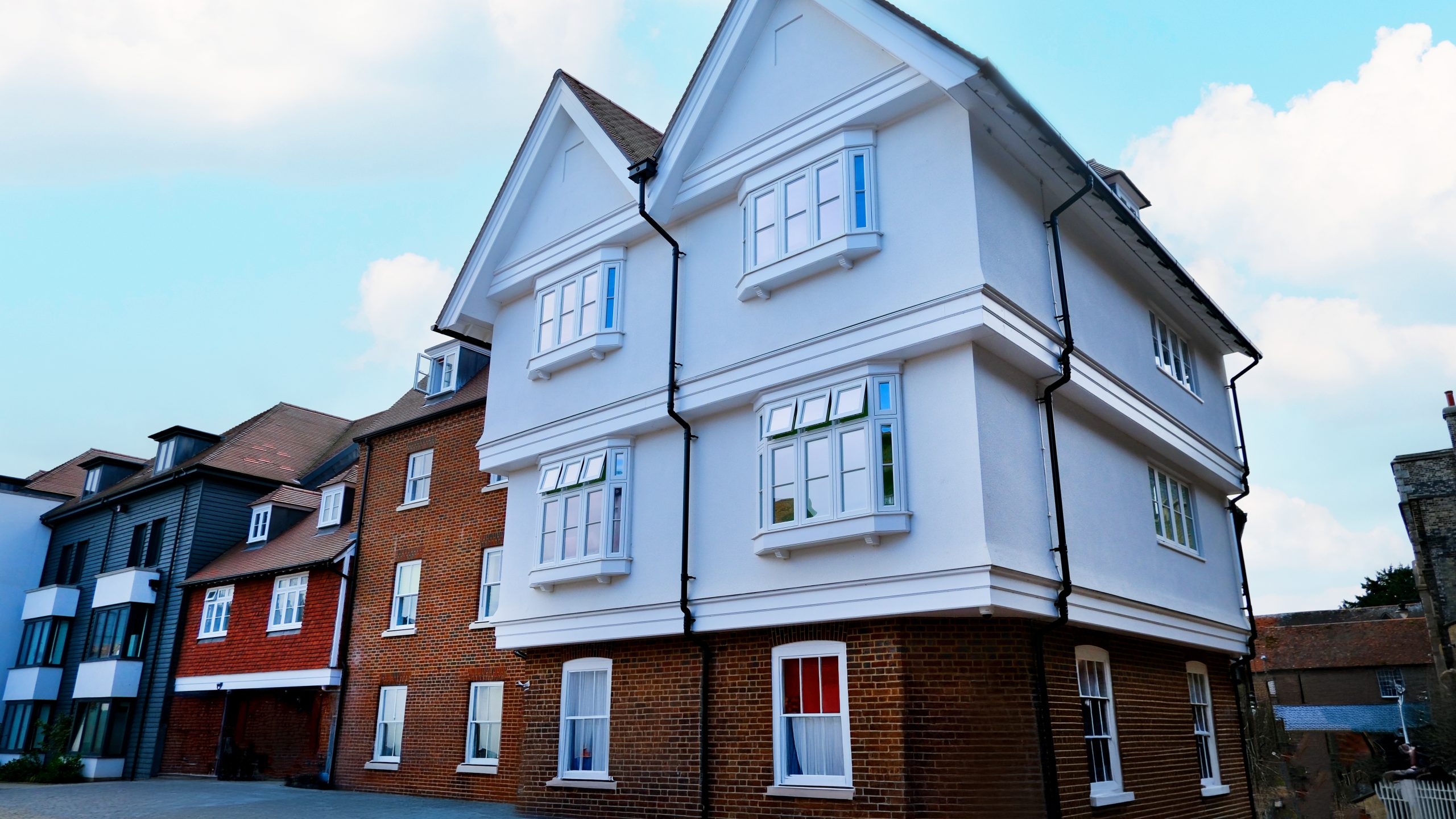
Westgate One: A year of recognition for Abbott Construction
Westgate One, Abbott Construction’s student accommodation development in central Canterbury, is enjoying a highly successful year, earning multiple award finalist and shortlist positions while reaching a significant project completion milestone.
Multiple awards recognition
Westgate One Project has been named a finalist in two separate regional award programmes this year. The scheme has reached the finals of the Constructing Excellence London and South East Awards 2026 in the Residential Project of the Year category, and was also shortlisted as a finalist for Best Construction Project at the South East Construction Awards 2026.
The project's design credentials have also been recognised by the industry: Westgate One made the shortlist for the RICS South East Regional Awards in the Residential Development category, and secured the win for Best Architectural Project at the South East Construction Awards.
Together, these nominations and wins reflect the scale, complexity and quality of the scheme, and reinforce Abbott's consistently high standards on major residential projects.
Completing the final phase
This recognition comes on the back of a significant construction milestone: the completion of the Freeman building, the final and most complex phase of the multi-block Westgate One development. Having maintained programme discipline since work began in 2020, the Freeman building was finished on schedule, ready to welcome students for the 2025/2026 academic year.
A collaborative achievement
None of this would have been possible without strong partnerships throughout the project to deliver the scheme on time and to a high standard.
The completion doesn't just mark the end of construction at Westgate One, it's the culmination of a proud, multi-year effort to create a vibrant, sustainable student community in the heart of Canterbury, and a fitting foundation for the recognition the project has earned this year.
About Abbott Construction
Abbott Construction is a Kent-based construction company with a history stretching back to 1947, working with developers and architects across the region to deliver high-quality buildings for communities, education, healthcare and residential developments.

Abbott Fundraising for Men’s Mental Health this Movember
This November, the team at Abbott Construction is proudly taking part in Movember.
With fresh faces, our staff are coming together to raise awareness and support vital programs focusing on mental health, suicide prevention, prostate cancer and testicular cancer.
Our site teams and office staff have joined thousands of people across the country to raise awareness and funds, already sporting some impressive (and sometimes questionable) moustaches, all in the name of a good cause. Every donation helps fund life changing research and services that make a real difference in the lives of men and their families.
You can follow our progress on social media and contribute to the Abbott Movember campaign but visiting our fundraising page.
Together, let’s change the face of men’s health.

Final Phase of £20m Westgate One Student Accommodation Project in Canterbury Complete
Abbott Construction has officially handed over Freeman Building, the final student accommodation block in the scheme comprising of four new build blocks and the conversion of the former Jaguar showroom building, marking the successful completion of the £20 million Westgate One development in Canterbury city centre.
Located on Pound Lane, Freeman Building presented the most complex logistical challenge of the project. Constructed on a tightly constrained site, the build required coordinated road closures, just-in-time material deliveries, and precisely managed tower crane operations to ensure safety and efficiency in the bustling city centre. Despite these challenges, Abbott delivered the project on schedule, ready for the 2025–26 academic year.
The development thoughtfully integrates traditional materials to complement Canterbury’s medieval streetscape, featuring a variety of window styles, traditional slate roofing, and tile hanging. Discreet mechanical and electrical installations, along with rooftop photovoltaic systems, reflect a commitment to sustainability without compromising the area’s historic character.
For client Paul Roberts, the completion of the Freeman Building signifies the full delivery of Westgate One, comprising five accommodation blocks now serving the city’s university community.
Abbott Construction, in collaboration with OSG Architecture, B&M, Considine and Harwoods, are proud to have delivered a scheme that honours Canterbury’s heritage whilst providing high-quality, modern living for its students.


Major New Business Park Development commences at Broad Oak Road, Canterbury
Abbott has officially commenced the first phase of a new business and retail park in Canterbury on behalf of Stour Valley Group. After a long period of planning and consultation we look forward to unveiling one of the first new, modern high-quality business parks to be built in the City for a long time.
Broad Oak Business Park will comprise 6 business units together with a retail food & beverage offer. Prominently situated on the former Formula One Autocentres site on corner of Broad Oak Road and Farleigh Road, construction has commenced on Phase 1. This will provide a new unit for Formula One Autocentres Limited plus additional business space, and a retail/food & beverage offer together with significant access improvements under a S278 Agreement, upgraded services and extensive external works and parking.
The £1.79m Phase 1 build began in July 2025 and is scheduled for completion in Spring 2026 after which it is hoped the remaining phases of the development will follow.
We are excited to now be on site and look forward to the spring where we can show off the new buildings. In the meantime, stay posted for updates on the progress.

Spring Lane Shortlisted for the RICS Awards 2024
Following the completion of the Spring Lane campus for Canterbury College, the project for East Kent College Group soon gained attention for its environmental focus and innovative design and construction.
As part of the effort to get the attention this unique building in the education sector deserves, we entered the project into the RICS Public Sector Award.
And now, in collaboration with b&m and Lee Evans Partnership, Spring Lane has made the regional shortlist alongside five others.
See the shortlist nominees here:

Proudly Supporting Tom’s Climb for Meningitis Research
Tom Hughes is known to a number of our customers and partners.
For those who don’t know Tom, he’s our Director Mick Hughes’ son. Tom has worked for us on occasion, on site, helping us deliver on projects as a labourer. The Abbott team always welcome Tom’s help on site during his breaks from his education. He’s a mature, reliable, 21 year old, with a great work ethic and a brilliant personality (he’s much funnier than his Dad). He’s currently studying for a degree in English Literature, due to graduate in 2024.
Tom lost a close friend to meningitis 6 years ago. He and Alex met when they were 8 years old. They developed a close bond through mutual interests. They ran together, they were involved in stage productions together and they shared experiences that Tom will never forget, including being paired on tasks as part of their Year 6 residential trip.
Tragically, Alex’s life was cut short at the age of 15, but Tom holds Alex’s memory and love for life dear, as someone who had a passion for living, for taking chances, and grasping opportunities.
Bacterial meningitis (as opposed to viral meningitis) is mercifully rare, and incidences are declining thanks to research and a vaccination programme, but it still affects more than 200 in the UK each year, of all ages. Children and teenagers are the most at risk and unless detected early, it is often fatal.
Treatment is hindered by initial flu like symptoms, which are often dismissed as anything serious, but the infection has rapid progress. 90% of children and teenagers who die of meningococcal meningitis die within 24 hours of diagnosis.
Vaccines are available to prevent some types of meningitis and most of these are part of the UK routine immunisation schedule. However, not all types of meningitis can be prevented by these vaccines.
Funds to continue research into new vaccines and also, to allow better promotion of the early warning signs to the population, are key to eradicating this aggressive infection, that takes lives so quickly.
Reading University, where Tom is studying, have organised a trip to Tanzania this August, where a group of 15 students will climb Kilimanjaro in the name of Meningitis research. The trip is self-funded, so every penny raised will be donated to the Meningitis Research Foundation. Tom will be part of the group, Joint Team Leader in fact, climbing with his heart on his sleeve for his friend Alex.
Tom has told us how when he was presented with the challenge, it immediately made him think of Alex, that he knew he would have loved to do this. It is part of the reason he wants to do it. To reach the summit in his friend’s name.
Abbott are only too proud to sponsor Tom in his efforts, with a £500 donation, and are hoping our network will support him too, including joining us in fundraising activities over the coming months.
We will be holding our inaugural Bat and Trap tournament in July, with the intention of this becoming an annual charity fundraising event. We’re looking for sponsorships or raffle prize donations from our supply chain, and so will be in touch with you all shortly.
Please dig deep and support this important cause. The Meningitis Research Foundation are working to defeat meningitis by 2030. Join us in helping them make that happen.
If you wish to donate directly, you can do so through Tom’s Just Giving page here https://www.justgiving.com/fundraising/tom-climbs-kilimanjaro
Or, if you want to get involved in any way with our fundraising efforts, please contact viv@abbottconstruction.co.uk

The Benefits of Green Roofs in Your Project
The popularity of green roofs has increased in recent years, being a unique feature of a building’s design and aesthetic and showing off the talents of architectural teams and contractors’ abilities.
Green roofs are exactly what you probably think they are. A roof of a building, whether that is the top of an apartment block or a sloping roof of an extension, consisting of its own ecosystem, filled with greenery and life.
With the net zero deadline creeping closer and closer, green roofs have been one of the most eccentric developments that have helped to combat carbon through our buildings. Not only are they an impressive design element, but they also have plenty of hidden benefits that are helping cities all over the world to counteract carbon emissions.
Because plants help to remove toxic chemicals out of the air, increasing the number of green roofs in urban areas can improve the overall air quality of the area, and in turn, reduce the number of respiratory diseases caused by pollution.
On a larger scale, a green roof can be used as a garden for those that don’t have much outdoor space or want to grow their own food. It can be somewhere people can connect with nature in places where it’s difficult to find and gain many mental and physical benefits from. It’s a method of rewilding an area and integrating rare plants or encouraging animals and insects, such as bees and butterflies to fulfil their roles in the ecosystem.
What’s most attractive isn’t just that they bring nature into an otherwise concrete jungle, but that it can work for most existing roofs and is relatively easy to implement with little change needed to the planned design.
The natural layers that a green roof is made up of also act as a barrier to all weather types. In the sun, the plants absorb the sun’s energy, reducing the summer temperatures indoors. Whereas, in winter, it acts as a natural insulator, helping to lock the heat inside, keeping up to 25% more heat inside as opposed to an uninsulated roof. They can also be a great addition to the drainage system of the building, as the water is absorbed into the substrate, reducing the amount that is released into the pipework where flooding can be a risk.
Because of this, the roof’s waterproof membrane is better protected from the elements, helping to increase the lifespan of it, with little to no maintenance involved.
The simple fact is that this is a great alternative to a typical roof that is usually a neglected area with no real use. It has some amazing economical and environmental benefits while also supporting biodiversity and wildlife habitats.
So, with all these benefits, why aren’t we seeing these everywhere in the UK?
Like almost everything else in the construction industry, it’s mainly down to cost. The implementation of green roofs costs more overall than a standard roof. That includes sourcing the materials and adapting the structural integrity of the roof to bear the excess weight – which is where retrofitting green roofs becomes a problem.
Some existing buildings won’t be suitable to adopt a green roof for practical and maintenance reasons such as the gradient of the slopes and the location. In these cases, installing a green roof can be even more costly and require large structural changes to be made.
Green roofs aren’t as popular in the UK as they are internationally. As an industry, we are working our way towards becoming more innovative, but don’t want to make changes or leap too far from the norm in fear that it doesn’t work and cause costly mistakes.
Green roofs are tried and tested, and just from reading all the above, you should be tempted to try it out on one of your buildings too.
In most cases, any disadvantages are counteracted by the other amazing benefits that they can bring to the environment, the community and a building’s functionality.
Abbott Construction have recently completed a project on Spring Lane in Canterbury for East Kent College Group where sustainability is at the heart of the design. The wildflower blanket of the green roof not only provides an aesthetic for the overlooking buildings, but has influenced the rest of the development and the values it’s been built on. The benefits to the ongoing efficiency outweighs any advantages of other roof material choices and because of this, we’re predicting an increase in popularity throughout Kent and the UK.

The Importance of Having an Environmental Management System
‘Eco-friendly,’ ‘sustainable’ and ‘net zero’ have become a part of most construction businesses daily vocabulary. The global ‘green’ issue will never truly go away. From modern technology we’re given more and more data to work with. We’re more informed regarding the impact we’re making on our planet, and we know we need to collectively work to reduce this impact and keep carbon levels from creeping up again.
Unsurprisingly, due to this, ISO 14001 standard is growing in popularity. Businesses are wanting to show their contributions to reducing their carbon footprint and what ideas they’ve got in the pipeline that continues with better practices.
Not only does this make the business’s actions look pretty good, but they also may require evidence of the official standard when tendering for contracts. Without this, doubts may arise from current or potential clients which may lose you work.
With the urgency to slam the breaks on climate change and meet a net zero target, ISO 14001 evidently tells others that the accredited company is actively assessing themselves on a regular basis to improve their processes and methodologies.
The standard doesn’t just apply to companies associated within the construction industry; any business can go through the process. It’s also not a necessity to have, but those without it already face a collection of huge disadvantages.
The ISO 14001 standard requires for you to document all the necessary information within your Environmental Management System, and to continue to do so through the annual audits. Some of this documentation includes outlining their environmental processes, monitoring of sites, equipment, products etc. and detailing the aspects of the businesses that the environmental control will be subjected to and has an influence on.
Because this is an audited standard, the certification body ensures that you meet all current legislation and challenges you to make greater environmental improvements year-on-year, in your office processes and on site.
ISO 14001 also helps you to make those initial changes in your business if you don’t know where to start or are unsure what else you can be doing to work more mindfully.
Arguably, every construction-related business should be working towards the accreditation, considering that the construction industry is the biggest source of waste and producer of embodied carbon in the UK. Every business should be acting towards reducing their environmental impact, accreditation, or no accreditation.